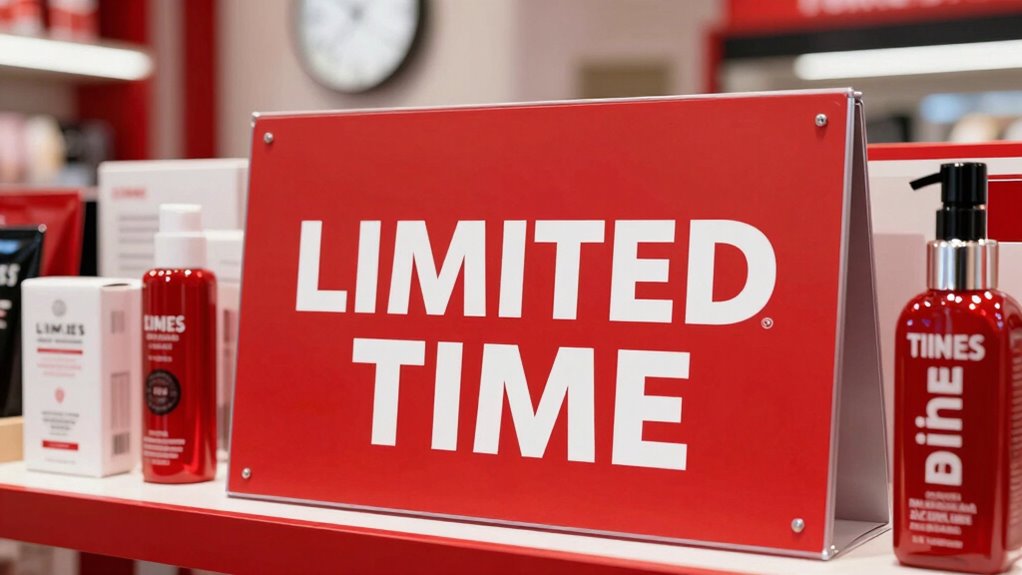

Retailers create urgency by using fake discounts and limited-time offers that pressure you to act quickly. They often display countdown clocks and flashing messages to make deals seem urgent, nudging you to buy before the opportunity disappears. Scarcity messages like “Only a few left” boost the fear of missing out, encouraging impulsive decisions. If you want to recognize these tactics and avoid falling for them, keep exploring the tricks behind these marketing strategies.
Key Takeaways
- Retailers use countdown timers and flashing messages to create a sense of limited time for purchases.
- Fake discounts and inflated original prices make deals seem more attractive than they really are.
- Limited stock messages trigger FOMO, encouraging impulsive buying to avoid missing out.
- Scarcity tactics suggest high demand, increasing perceived product value and urgency.
- Marketing techniques evoke emotional responses, persuading consumers to act quickly before missing opportunities.

Retailers understand that capturing your attention quickly is essential, especially when they want you to act now. They use various tactics to create a sense of urgency, driving you to make quick decisions rather than taking the time to think things through. One common method involves price manipulation. They might mark up the original price and then offer a “discount” that looks significant but isn’t necessarily a real bargain. This tricks you into thinking you’re getting a deal, even if the final price isn’t much lower than the regular price. Sometimes, they use limited-time offers that pressure you to buy before the deal disappears, making you feel like missing out is a loss you can’t afford.
Retailers create urgency with fake discounts and limited-time offers to prompt quick, impulsive purchases.
Limited availability is another powerful tool. Retailers often display messages like “Only a few left in stock” or “Limited quantities available,” which give the impression that the product is highly sought after. This tactic taps into your fear of missing out, pushing you to buy quickly rather than waiting. When you believe a product is scarce, you’re more likely to act impulsively, convinced that you’re securing something valuable before it’s gone. This scarcity marketing plays on your psychology, making you associate limited availability with exclusivity and importance, even if it’s just a marketing ploy. Recognizing how psychological manipulation influences your buying behavior can help you resist unnecessary purchases. Additionally, understanding the marketing tactics behind these strategies can empower you to make more informed choices. Being aware that these methods are designed to manipulate your emotions can help you pause and evaluate whether the urgency is genuine or just a sales ploy.
These tactics work together to create a sense of urgency that’s hard to resist. When you see a countdown clock or a flashing “Sale Ends Soon” message, your brain perceives a deadline, which heightens your desire to purchase. Retailers know that delaying your decision might lead to second-guessing or walking away, so they craft scenarios that make immediate action seem like the best choice. Price manipulation and limited availability are subtle but effective ways to pressure you into buying on impulse, often without thoroughly considering whether you genuinely need the product or if it’s worth the price. Being aware of marketing strategies that are designed to trigger emotional responses can empower you to make more conscious decisions.
Ultimately, these strategies aren’t about offering you the best deal—they’re about making you feel like you’re missing out if you don’t act now. Retailers leverage your fear of losing the opportunity to create a sense of scarcity and urgency that compels you to make quick purchases. Recognizing these tactics helps you regain control, so next time you’re faced with a limited-time offer or a message about low stock, take a moment to pause and evaluate whether it’s truly a deal or just a marketing trick designed to manipulate your buying behavior.
As an affiliate, we earn on qualifying purchases.
Frequently Asked Questions
How Do Retailers Determine Which Urgency Tactics to Use?
Retailers determine which urgency tactics to use by analyzing your shopping behavior and leveraging psychological triggers, such as scarcity principles. They observe how you respond to limited-time offers or low-stock alerts, then tailor their strategies accordingly. If you tend to act quickly when items are scarce, they’ll emphasize scarcity to motivate your purchase. They use data-driven insights to select the most effective tactics that tap into your desire to avoid missing out.
Are Urgency Strategies Used More in Online or Brick-And-Mortar Stores?
You’ll find urgency strategies are more prevalent online, leveraging digital scarcity and emotional triggers to prompt quick purchases. Retailers use countdown timers, limited stock notices, and flash sales to create a sense of scarcity, tapping into your fear of missing out. In brick-and-mortar stores, these tactics are less common but still used through in-store promotions and limited-time offers. Overall, online platforms excel at deploying digital scarcity to trigger immediate action.
Can Creating Urgency Lead to Customer Distrust or Backlash?
Creating urgency can lead to customer manipulation and trust erosion if overused or perceived as deceptive. You might feel pressured or manipulated, which damages your trust in the retailer. When customers sense that urgency tactics are insincere, they may backlash or avoid future purchases. Retailers need to balance urgency with transparency to maintain customer loyalty and prevent trust erosion, ensuring their marketing strategies don’t backfire.
How Do Retailers Measure the Success of Urgency Tactics?
You gauge the success of urgency tactics by watching how quickly customers respond, like catching fireflies in a jar. You analyze sales data and conversion rates, measuring how psychological triggers and emotional appeals spark action. Customer feedback reveals whether these tactics build trust or cause backlash. When urgency drives more purchases without damaging loyalty, you know your strategy hits the mark, turning fleeting moments into lasting wins.
Are There Ethical Concerns With Using Urgency to Influence Buyers?
Yes, there are ethical implications with using urgency to influence buyers. You should consider how consumer manipulation can pressure people into impulsive decisions they might regret later. While creating urgency can boost sales, it risks exploiting vulnerable customers or fostering false scarcity. As a responsible retailer, it’s essential to balance effective marketing with honesty, ensuring your tactics don’t deceive or manipulate consumers, maintaining trust and integrity in your brand.
limited time offer countdown timer
As an affiliate, we earn on qualifying purchases.
As an affiliate, we earn on qualifying purchases.
Conclusion
So, next time you feel that rush to buy, remember retailers often craft urgency through clever tricks. Did you know that 79% of shoppers admit to making impulsive purchases because of limited-time offers? That’s a huge chunk of buyers swayed by urgency tactics. Stay aware, take a breath, and think twice before falling for the pressure. Recognizing these strategies helps you make smarter choices instead of just reacting to a retailer’s tricks.
scarcity marketing psychology books
As an affiliate, we earn on qualifying purchases.
As an affiliate, we earn on qualifying purchases.
As an affiliate, we earn on qualifying purchases.