
At checkout, retailers use psychological tricks to trigger your impulses. They often create a sense of urgency with limited-time offers, while strategically placing add-ons to catch your eye when you’re most decision-ready. Feelings of completion or satisfaction make extra purchases seem appealing, and cognitive biases like scarcity and anchoring influence your choices. Being aware of these tactics can help you make smarter decisions, and if you keep exploring, you’ll discover how to better control your spending.
Key Takeaways
- Checkout moments heighten decision readiness, increasing susceptibility to spontaneous, emotion-driven add-on purchases.
- Retailers leverage psychological biases like scarcity and anchoring to influence last-minute buying decisions.
- Feelings of purchase completion and satisfaction make consumers more open to adding extra items.
- Limited-time offers and strategic placement create urgency, prompting quick, impulsive add-ons.
- Awareness of these tactics enables consumers to make more mindful, intentional checkout choices.
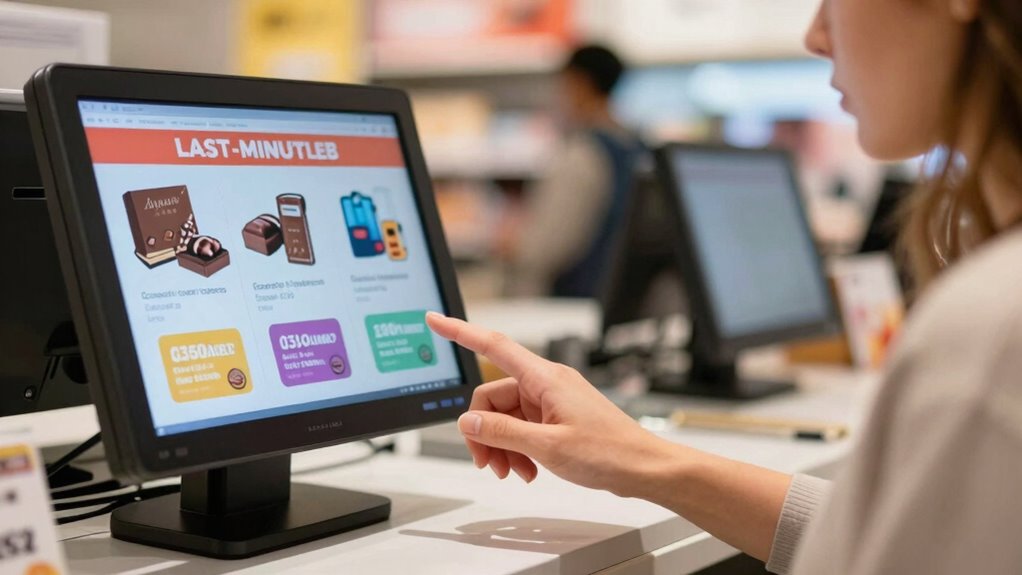
Ever wonder why those tempting last-minute add-ons pop up at checkout? It’s no accident. Retailers and online stores craft these moments to tap into your impulse buying tendencies, leveraging psychological tricks rooted in cognitive biases. When you’re about to complete a purchase, your brain is in a heightened state of decision-making, making you more susceptible to quick, emotion-driven choices. That’s exactly when those small, seemingly insignificant add-ons appear, aiming to sway your final decision. Recognizing these tactics can help you make more mindful choices during checkout. Impulse buying plays a significant role here. As you approach checkout, you’re often feeling a sense of completion or satisfaction, which makes you more open to adding one more item—especially if it’s presented as a limited-time offer or a special deal. Retailers understand that a significant portion of their sales come from these spontaneous decisions, so they design the checkout process to nudge you toward making extra purchases without much thought. This is where cognitive biases come into play. For example, the scarcity effect—when an item is labeled as “limited stock” or “today only”—triggers a fear of missing out, compelling you to buy before it’s gone. Similarly, the anchoring bias can influence your perception of value; if you see a discount on a small add-on, you’re more likely to consider it a good deal, regardless of whether you actually need it.
Last-minute add-ons exploit your impulse tendencies during checkout’s heightened decision-making moment.
They also capitalize on the commitment bias, where once you’ve committed to a purchase, you’re more likely to add a few more items to justify your initial decision. The ease of clicking a button makes it effortless to say “yes” to one more thing, especially when it’s framed as an easy upgrade or an essential accessory. Retailers often use social proof, displaying reviews or “best-seller” labels, to reinforce the idea that others have already found these add-ons valuable. This taps into the bandwagon effect, making you more likely to follow suit. Additionally, cognitive biases are employed to subtly influence your subconscious decision-making processes. Some companies even optimize the timing and placement of these add-ons to maximize their impact, tapping into the decision fatigue that occurs when your mental resources are depleted. All these tactics work because they manipulate your cognitive biases and impulse tendencies. They don’t require complex persuasion; instead, they subtly influence your subconscious decision-making processes. The next time you’re checking out and see those last-minute suggestions, recognize it as a psychological strategy designed to increase your overall spend. Being aware of these tactics gives you a better chance to pause and decide whether those add-ons truly serve your needs or are just part of the checkout psychology game.
last-minute checkout add-on products
As an affiliate, we earn on qualifying purchases.
As an affiliate, we earn on qualifying purchases.
Frequently Asked Questions
How Do Retailers Choose Which Add-Ons to Offer?
Retailers choose add-ons based on what triggers impulse buying and reduces decision fatigue for you. They analyze popular items and suggest relevant products that seem easy to add without much thought. By offering small, attractive options at checkout, they tap into your tendency to make quick, emotional decisions, increasing the chances you’ll make extra purchases. This strategy leverages your impulse to buy without overloading you with choices.
Do Different Demographics Respond Differently to Last-Minute Upsells?
Different demographics definitely respond differently to last-minute upsells, so you need to know your audience inside and out. Younger shoppers might be more impulsive, while older ones prefer thoughtful choices. By understanding their shopping behavior and demographic preferences, you can tailor your offers to hit the sweet spot. It’s all about reading the room and offering add-ons that resonate, rather than a one-size-fits-all approach.
How Effective Are Personalized Add-Ons Compared to Generic Ones?
Personalized add-ons are more effective than generic ones because they build consumer trust by resonating with individual preferences. They help reduce decision fatigue, making it easier for you to choose relevant products without feeling overwhelmed. When add-ons are tailored, you’re more likely to perceive them as valuable, increasing your chances of making an additional purchase. Personalization directly influences your buying behavior by fostering trust and easing decision-making.
Can Checkout Add-Ons Influence Long-Term Customer Loyalty?
Checkout add-ons can positively influence your long-term customer loyalty by triggering impulse buying and leveraging cognitive biases. When you see relevant, tempting options, you’re more likely to make spontaneous purchases, which can create a sense of satisfaction and trust. Over time, this boosts your loyalty, especially if the add-ons feel personalized and aligned with your preferences. This strategy subtly encourages repeat business through smart, psychology-driven upselling.
What Psychological Theories Explain the Success of Last-Minute Add-Ons?
You’re caught in an irresistible whirlwind of impulse buying at checkout, and decision fatigue makes it even easier to say yes. Psychological theories like the scarcity effect and mental shortcuts explain this success, as you subconsciously believe you’re missing out or want to simplify choices. The last-minute add-ons tap into your brain’s desire for quick, effortless wins, making it almost impossible to resist those tempting extras.
As an affiliate, we earn on qualifying purchases.
Conclusion
Next time you’re prompted with those tempting add-ons at checkout, remember—it’s no accident. These subtle nudges play on your subconscious, whispering, “Just one more thing,” like a siren song pulling you in. Recognize the trap, and you regain control over your choices. The next time you face that digital siren call, ask yourself—are you really shopping, or just falling for a clever psychological dance? Your wallet will thank you.
As an affiliate, we earn on qualifying purchases.
As an affiliate, we earn on qualifying purchases.