
TL;DR

Get your next haul delivered free — and shop member deals
- Fast, free delivery on millions of items
- Access to Prime Big Deal Days deals on October 6–7
- Prime Video, Amazon Music and more included
Federal Reserve Governor Christopher Waller said AI could help improve cross-border payment screening and routing, while warning that autonomous purchasing needs stronger trust mechanisms and safeguards. In a speech at Sibos 2026, he described agentic commerce as early-stage and distinguished shopping assistance from agents authorized to pay on a consumer’s behalf.
Federal Reserve Governor Christopher J. Waller said artificial intelligence could help make cross-border payments more efficient and secure, while the use of AI agents to buy goods for consumers will require stronger safeguards. In a speech delivered at Sibos 2026 in Miami on September 29, he described agentic commerce as an early-stage development that could reshape payments if adoption grows.
Waller said large language models could improve sanctions screening and anti-money-laundering systems by reducing false-positive alerts, based on research he cited. Fewer mistaken alerts could allow legitimate transactions to proceed with less friction and free staff to examine more complex, high-risk cases. He said these systems would augment, not replace, faster traditional anomaly-detection methods.
AI could also help payment providers choose cross-border routes and manage foreign exchange conversion and liquidity. Waller said agents could evaluate trade-offs involving cost, speed and reliability if given suitable data and criteria. He presented this as potential, rather than a reported operational result.
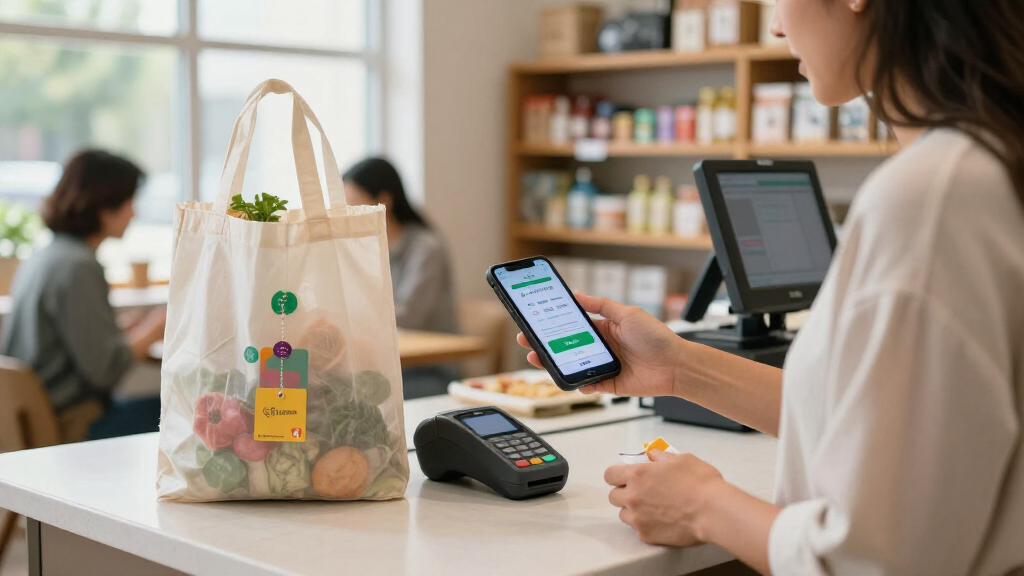
For online shopping, Waller distinguished between agent-assisted commerce, where a person uses AI for discovery but makes the purchase and payment, and agent-delegated commerce, where a person authorizes an agent to shop and pay within set limits. He gave the example of an agent using a pre-funded virtual card to buy groceries based on past purchases. He said consumer-to-business purchases are expected to be an early use case, with assistance likely to precede more autonomous delegation.
Safeguards for Agent-Led Purchases
The distinction between helping someone shop and spending on their behalf is consequential for consumer control and payment security. Delegated agents could act without a person reviewing every item or transaction, raising the risk of unintended purchases. Waller said this model calls for a more extensive buildout of trust mechanisms and guardrails.
For payment companies and merchants, the speech frames AI not only as a way to automate existing operations but as a potential participant in transactions. That shift could affect how authority to spend is granted and limited. Waller did not describe a settled technical or regulatory framework; his remarks identify questions the industry will need to address as these services develop.
virtual prepaid cards for online shopping
As an affiliate, we earn on qualifying purchases.
As an affiliate, we earn on qualifying purchases.
From Fraud Detection to Commerce
Waller said the payments sector has a long history of using machine learning to combat fraud and was an early adopter of large language models for tasks such as payment reconciliation. His Sibos speech builds on that use of AI in back-office and security work, turning to agents that can plan and carry out multistep processes.
He also discussed the risks alongside possible gains. Waller warned that AI could increase the volume and sophistication of cyberattacks, and said a successful attack on interconnected payment infrastructure could disrupt international commerce. AI may also assist defenders with threat detection, exposure management and finding software vulnerabilities, but he stressed that operators face a broad attack surface while an attacker may need to exploit only one weakness.
AI-powered cross-border payment solutions
As an affiliate, we earn on qualifying purchases.
As an affiliate, we earn on qualifying purchases.
Adoption and Controls Remain Open
Waller characterized agentic commerce as early-stage; the speech does not give adoption figures, a rollout timetable or evidence that autonomous payment agents are in widespread use. It also does not specify common standards for setting spending limits, confirming purchases, handling mistakes or assigning responsibility when an agent acts outside a consumer’s intent.
The potential gains in screening and payment routing are also not quantified in the speech. Waller cited research on false-positive reductions but did not give a figure or describe a particular deployment. The scale of any benefit, and the security performance of AI agents in live payment systems, remain unclear.
As an affiliate, we earn on qualifying purchases.
Industry Tests Trust and Security
The next developments will depend on how payment providers, merchants and AI companies test agents and establish authorization, spending limits and oversight for delegated transactions. Waller’s speech points to the need for those trust mechanisms but does not announce a Federal Reserve program, rule or deadline.
For cross-border payments, providers may explore AI-assisted screening, cybersecurity and routing while retaining established controls. The central test will be whether such systems improve speed and reliability without weakening defenses or allowing unwanted transactions. The speech leaves the timing and extent of adoption to future industry developments.
AI fraud detection tools for payments
As an affiliate, we earn on qualifying purchases.
As an affiliate, we earn on qualifying purchases.
Key Questions
What did Christopher Waller say about AI and payments?
He said AI could support cross-border payment screening, cybersecurity and routing, and discussed how agents might shop and pay for consumers. He presented these as potential uses, not confirmed outcomes at scale.
What is the difference between agent-assisted and agent-delegated commerce?
In agent-assisted commerce, AI helps with product search while the consumer decides and pays. In agent-delegated commerce, the consumer authorizes an agent to shop and make payments within specified limits.
Are AI agents already making purchases widely?
The speech describes agentic commerce as being in an early phase. It provides no figures showing how widely consumers or merchants are using agents to complete purchases.
How could AI affect cross-border payments?
Waller said AI could help reduce false-positive alerts in sanctions and anti-money-laundering screening and could assist with routing and currency-conversion decisions. The speech does not quantify those potential gains.
What risks did Waller identify?
He warned that AI could support more sophisticated cyberattacks and said delegated agents could make unintended purchases. He argued that payment systems need security defenses and trust mechanisms as the technology develops.
Source: primary
Halloween Picks
halloween
As an affiliate, we earn on qualifying purchases.