
TL;DR

Get your next haul delivered free with Prime
- Fast, free delivery on millions of items
- Prime Video, Amazon Music and more included
- Member-only deals all year
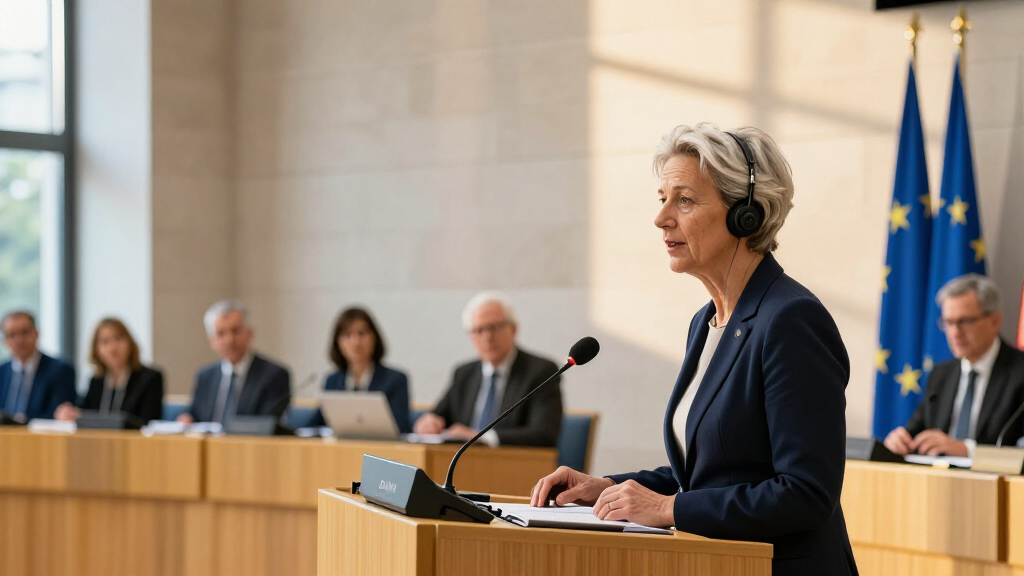
In a statement to the IMF’s International Monetary and Financial Committee on October 17, ECB President Christine Lagarde said the euro area had remained resilient but faced downside growth risks and an energy-driven rise in inflation. She said the ECB had raised rates by 25 basis points in both June and September and would base future decisions on incoming data and its policy reaction function.
European Central Bank President Christine Lagarde told the IMF’s International Monetary and Financial Committee on October 17 that the euro area economy had so far proved resilient, while a surge in energy prices was lifting inflation and creating risks for growth. She said the ECB had raised its key interest rates by 25 basis points in September, following a same-sized increase in June, and would judge future policy using incoming data and its established reaction function.
In the statement, issued for the committee’s 54th meeting during the IMF Annual Meetings, Lagarde described a global economy facing high uncertainty. She pointed to the continuing Middle East conflict and its effects on energy markets, as well as trade tensions and protectionist measures that she said were weighing on confidence and changing trade flows. Investment linked to artificial intelligence had helped support activity and trade, particularly in economies connected to technology supply chains, according to her assessment.
For the euro area, Lagarde cited broad-based growth across most countries and sectors in the first half of 2026. The ECB staff projections published in September put growth at 0.9% in 2026, 1.4% in 2027 and 1.5% in 2028. The projections anticipate support from recovering real incomes as energy inflation eases, a resilient labour market, public spending on infrastructure and defence, and investment in AI and digital technologies. Lagarde said the outlook remained uncertain, especially because the length and intensity of the Middle East conflict could affect how energy shocks spread through the economy.
Inflation was a central concern. Euro area headline inflation reached 3.8% in September, which Lagarde attributed mostly to higher energy inflation and, to a lesser extent, increases in food and services prices. Core inflation rose slightly to 2.5%. She said measures of underlying inflation were broadly stable and wages had not yet shown a material response to the energy shock. The ECB expects higher energy costs to keep headline inflation above target into the first half of 2027, before it falls toward target around the end of that year.
Lagarde said a measured monetary policy response was appropriate because the energy shock was too large to ignore, but the ECB had not yet seen significant energy-price pass-through into other prices and wages beyond what its projections already captured. She also noted that financing conditions had tightened and long-term interest rates had risen since the ECB’s previous meeting, factors she said would weigh on growth and limit pass-through more than projected in September.
Energy Costs Shape ECB Policy
The statement connects the energy shock to both inflation and growth risks, leaving the ECB with competing pressures. Higher energy prices could keep inflation elevated, while tighter financing conditions and uncertainty could weaken activity. Lagarde’s account indicates why the Governing Council raised rates while describing its response as measured: policymakers are seeking to contain inflation without treating every near-term price rise as evidence of broader, sustained pressure.
The outlook also matters beyond monetary policy. Lagarde urged governments to preserve fiscal sustainability and, where debt is high, rebuild buffers through spending reprioritisation and more effective public finances. She said any government response to the energy shock should be temporary and targeted. Her statement therefore links near-term inflation management with questions about public spending, investment and the euro area’s capacity to withstand future shocks.
energy-efficient home heating systems
As an affiliate, we earn on qualifying purchases.
As an affiliate, we earn on qualifying purchases.
June and September Rate Increases
The statement records two recent ECB decisions: 25-basis-point increases in June and September. Lagarde said policy decisions are guided by three criteria: the inflation outlook and its risks in light of incoming economic and financial data, the dynamics of underlying inflation, and the strength of monetary policy transmission. She did not announce a new rate decision in this statement; she described the reasoning behind the September move and the framework for future decisions.
Lagarde also referred to the ECB’s enhanced EUREP repo facility for central banks. The Governing Council decided on its operational features and onboarding process in July. The ECB says the facility is intended to support smooth monetary-policy transmission and reinforce the euro’s international role; Lagarde reported that more than 30 central banks had expressed interest over the preceding six months.
“The global economy has proven surprisingly resilient in the face of high uncertainty.”
— Christine Lagarde, ECB president, in her statement to the IMFC
inflation protection investment products
As an affiliate, we earn on qualifying purchases.
As an affiliate, we earn on qualifying purchases.
Conflict and Inflation Risks Persist
The statement does not establish how long or how intensely the Middle East conflict will affect energy markets. That uncertainty makes the scale and duration of the inflation shock unclear, as does the extent to which higher energy costs may eventually feed into food prices, other goods and services, and wages. Lagarde said the ECB had seen no significant pass-through beyond what was already included in its projections, but that assessment could change with new data.
There is also uncertainty around the growth outlook. The September projections offer a forecast, not a confirmed outcome, and Lagarde identified risks on the downside. The statement does not specify the size or timing of any future interest-rate moves. It also does not provide additional details on the “sources of risk and vulnerabilities” heading listed for its financial-stability discussion.
As an affiliate, we earn on qualifying purchases.
ECB Decisions Depend on Incoming Data
Lagarde said the Governing Council would make a comprehensive assessment of incoming data under its reaction function when setting future monetary policy. The statement gives no date or outcome for a subsequent rate decision. Inflation, wages, energy prices, activity and financing conditions are among the developments relevant to the three criteria she outlined.
For the wider outlook, the ECB’s published projections point to headline inflation declining after the first quarter of 2027 and returning to around target toward the end of that year. That remains a forecast, and the statement says a more intense or persistent energy shock could produce higher and more persistent inflation. The effects of the conflict and the pace of energy-price pass-through remain key developments to watch.
As an affiliate, we earn on qualifying purchases.
Key Questions
What did Christine Lagarde tell the IMFC?
She said the euro area economy had remained resilient but faced energy-driven inflation and downside risks to growth. She also outlined the ECB’s recent rate decisions and the criteria it uses to set policy.
What rate increases did the ECB make?
Lagarde said the Governing Council raised key ECB interest rates by 25 basis points in June and another 25 basis points in September 2026. Her statement did not announce a further increase.
How high was euro area inflation in September?
Lagarde reported that headline inflation was 3.8% in September 2026, while core inflation was 2.5%. She said higher energy inflation accounted for most of the headline increase.
When does the ECB expect inflation to return toward target?
The statement says the ECB expects headline inflation to decline after the first quarter of 2027 and return to around target toward the end of 2027. This is a projection, and a more persistent energy shock could alter the path.
What remains uncertain about the outlook?
The duration and intensity of the Middle East conflict, the path of energy prices and the extent of their pass-through to other prices and wages remain unclear. Lagarde also said the risks to euro area growth were tilted to the downside.
Source: primary
Halloween Picks
halloween
As an affiliate, we earn on qualifying purchases.