

Cyber Monday smart home shopping presents a practical choice: add useful devices at a low upfront cost, or pay more for products that may work together more smoothly and offer stronger features. Budget smart home deals often center on individual bulbs, plugs, cameras, and speakers. Premium deals are more likely to include advanced sensors, higher-resolution cameras, displays, or ecosystem bundles. Neither price tier guarantees compatibility or a good discount, so the right choice depends on what you already own and what you want to automate.

Get your next haul delivered free with Prime
- Fast, free delivery on millions of items
- Prime Video, Amazon Music and more included
- Member-only deals all year

Linkind Matter Smart Plug, Work with Apple Home, Alexa, Siri, Google Home
- ✔ Connectivity: Matter; 2.4GHz Wi-Fi
- ✔ Network requirement: IPv6 stated in product description
- ✔ Rated current: 15A
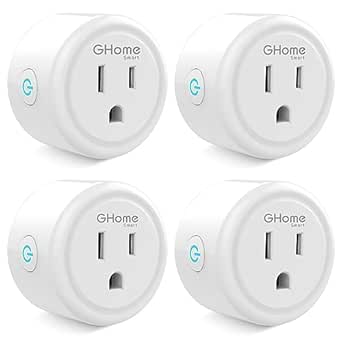
GHome Smart Plug Mini, WiFi Smart Outlet Plug Works with Alexa and Google Home, Timer Outlet with APP Control, 2.4GHz Network Onl…
- ✔ Pack size: 4 plugs
- ✔ Connectivity: Wi-Fi and Bluetooth; 2.4GHz Wi-Fi only
- ✔ Rated current: 10A per plug
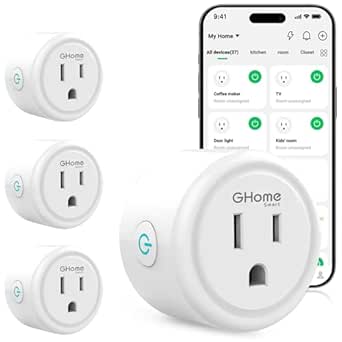
GHome Smart Plug, WiFi Smart Plugs that Work with Alexa and Google Home
- ✔ Pack size: Single plug
- ✔ Connectivity: Wi-Fi and Bluetooth; 2.4GHz Wi-Fi only
- ✔ Rated current: 10A
Choose budget deals if you are testing smart home routines, filling a specific gap, or buying a few straightforward devices. Premium deals make more sense when features such as reliable local control, richer video, broader compatibility, or a better display will see regular use. The comparison below focuses on those shared decision points. Since Cyber Monday offers change by retailer, model, and region, check the current product specifications, sale price, and support terms before purchasing.
At a Glance
| Criteria | Budget smart home deals | Premium smart home deals | Winner |
|---|---|---|---|
| Upfront cost | Usually lower per device; introductory bundles can reduce the cost of trying a category. | Higher purchase price, sometimes offset by a genuine Cyber Monday reduction or bundle. | A |
| Compatibility | Varies widely. Check the exact model, Matter support, and required hub or app. | Often offers broader ecosystem support on selected products, but compatibility still needs checking. | Depends |
| Everyday features | Covers common tasks such as switching plugs, dimming bulbs, and basic alerts. | More likely to include advanced sensing, richer camera features, or a better display. | B |
| Integration and automation | Can be sufficient for simple schedules and voice commands, though app and hub requirements differ. | Can provide more coordinated controls and richer routines within a supported ecosystem. | B |
| Privacy and security | Depends on the brand and model. A low price does not reveal how data is handled. | Can provide more controls on some models, but premium pricing alone does not guarantee stronger privacy. | Depends |
| Reliability and support | May offer fewer advanced capabilities or shorter support commitments; verify the product terms. | May include more capable hardware and stronger service options; confirm warranty and update details. | Depends |
| Value over time | Best when a few inexpensive devices meet a clear need and remain compatible with your setup. | Worth the premium when its extra features solve recurring problems or replace multiple purchases. | Depends |
Linkind Matter Smart Plug, Work with Apple Home, Alexa, Siri, Google Home
For a home that already spans more than one assistant or smart home platform, Matter compatibility gives this Linkind plug the clearest advantage in the group. The listing names Apple Home, Alexa, Google Home, Siri, and SmartThings, so we can choose a platform rather than commit every outlet to one manufacturer’s app. Compared with the GHome plugs, which require setup in the GHome app before voice assistants can control them, Linkind is designed to join a Matter platform directly once the required controller is in place.Its other differentiator is local network control: the description says Matter devices on the LAN can communicate without an internet connection after setup. That can help preserve in-home control during an internet outage, though remote access is a separate feature and the listing says it is available through the app. The 15A/1800W rating also exceeds the GHome models’ stated 10A/1200W limits, giving buyers more rated capacity for compatible appliances. It is not permission to use any load indiscriminately; check the device’s requirements.The catch is setup readiness. Apple Home, Alexa, Google Home, and SmartThings require a Matter-certified hub or controller; the AiDot app is offered as an alternative without a hub. The plug also requires 2.4GHz Wi-Fi and IPv6 according to the listing. Compared with the more self-contained GHome app route, those requirements may add friction. We would choose Linkind for a mixed-platform household that already has a controller, and skip it if we want the simplest app-only setup or cannot confirm IPv6 support.
Pros:
- Matter support includes Apple Home, Alexa, Google Home, and SmartThings.
- Local network control is described as available after setup, even if internet access is lost.
- Rated at 15A and 1800W, above the two GHome models’ stated limits.
- AiDot app control is listed as an option without a separate hub.
Cons:
- A Matter-certified controller is required for the major platform integrations.
- Requires 2.4GHz Wi-Fi and IPv6, which may complicate setup on some networks.
- The product description mentions remote control through an app, but does not establish that every platform provides remote access independently.
Best for: Households using multiple smart home platforms that have, or plan to add, a compatible Matter controller and want local network control.
Not ideal for: Buyers seeking the least involved setup, homes without a compatible controller for their chosen platform, or anyone whose router cannot meet the stated IPv6 and 2.4GHz requirements.
Bottom line: Choose Linkind when Matter flexibility and its higher stated power rating matter more than the simpler GHome app-first setup.
“Choose Linkind when Matter flexibility and its higher stated power rating matter more than the simpler GHome app-first setup.”
GHome Smart Plug Mini, WiFi Smart Outlet Plug Works with Alexa and Google Home, Timer Outlet with APP Control, 2.4GHz Network Onl…
When the goal is to put several lamps or small appliances on schedules, four compact outlets in one pack make this GHome Mini the most practical coverage pick. We can group plugs and control them together, which is useful for a set of lights that should switch on in the evening or for multiple devices that need a shared routine. Compared with the single GHome plug, the bundle covers more outlets; compared with Linkind, it favors quantity and a familiar app-and-assistant workflow over Matter support.Setup runs through the GHome app first, then the plugs can work with Alexa or Google Assistant. The listing also describes remote app control, schedules, timers, and auto-off. Its small stated dimensions—about 2 by 2 by 1 inches—may help in crowded outlet areas, although we should still check whether neighboring sockets remain accessible in our particular wall plate or power strip.The limits are meaningful. Each plug is rated at 10A and 1200W, below Linkind’s 15A/1800W rating, so this bundle is aimed at modest household loads rather than appliances that exceed those limits. It supports 2.4GHz Wi-Fi, not 5GHz, and it is not described as Matter-compatible. Buyers who want Apple Home integration or local Matter control should look to Linkind; buyers who only need one outlet may find the standard GHome plug less than they need in quantity. This is the strongest fit when several compatible devices need basic automation at once.
Pros:
- Four compact plugs provide coverage for multiple outlets.
- Supports schedules, timers, auto-off, grouping, and app control.
- Works with Alexa and Google Assistant after GHome app setup.
- ETL and FCC certification are stated in the listing.
Cons:
- Each plug is rated at 10A/1200W, below Linkind’s stated capacity.
- Requires 2.4GHz Wi-Fi and does not support 5GHz.
- The listing does not identify Matter or Apple Home support.
Best for: Buyers who want to automate multiple lamps or other compatible, modest-power devices across rooms with Alexa or Google Assistant.
Not ideal for: People who need Matter or Apple Home support, have only one outlet to automate, use a 5GHz-only network, or need a plug rated above 10A/1200W.
Bottom line: Pick the four-pack when broad, basic Alexa or Google automation matters more than Matter compatibility or higher per-outlet capacity.
“Pick the four-pack when broad, basic Alexa or Google automation matters more than Matter compatibility or higher per-outlet capacity.”
GHome Smart Plug, WiFi Smart Plugs that Work with Alexa and Google Home
For one lamp, fan, humidifier, or seasonal light, the standard GHome Smart Plug covers the basics without asking us to adopt a Matter setup. We can schedule on and off times, control the outlet from the app, or use Alexa and Google Assistant after connecting the plug to the GHome app. In that respect it follows the same app-first approach as the Mini four-pack, but it is the more focused choice when we only need to automate a single outlet.The listing names compatibility with the GHome, Smart Life, and Tuya apps, as well as group control and sharing with family members. That gives it more app options than the supplied Mini description specifies. The tradeoff is that none of these options removes the 2.4GHz Wi-Fi requirement, and the listing explicitly says the plug cannot connect directly to Alexa or Google Home without first joining the network and GHome app. Compared with Linkind, it has no stated Matter support or higher 15A rating, so it is less compelling for a multi-platform system or higher-capacity compatible load.Its stated rating is 10A/1200W at 120V, matching the Mini rather than Linkind. The product information includes a temperature rating and several electrical terms, but those details do not change the central buying question: this is a basic, single-plug timer and remote-control option. We would choose it for a small number of simple routines and skip it if we want multiroom coverage from one purchase, Apple Home integration, or a higher stated capacity. Always check the appliance’s power draw and compatibility before use.
Pros:
- Supports schedules, timers, remote app control, grouping, and family sharing.
- Works with Alexa and Google Assistant after GHome app setup.
- Listing names GHome, Smart Life, and Tuya app compatibility.
- No separate smart home hub is listed as required.
Cons:
- Limited to 2.4GHz Wi-Fi.
- Rated at 10A/1200W, lower than Linkind’s 15A/1800W.
- Requires app and network setup before Alexa or Google Home integration.
Best for: Someone who wants app and voice control for one compatible lamp or small appliance and is comfortable with a GHome app-first setup.
Not ideal for: Buyers who want Apple Home or Matter, multiple outlets in one pack, 5GHz-only Wi-Fi, or a rating above 10A/1200W.
Bottom line: Choose the standard GHome plug for one straightforward scheduled outlet, while the Mini pack makes more sense when we need several.
“Choose the standard GHome plug for one straightforward scheduled outlet, while the Mini pack makes more sense when we need several.”
As an Amazon Associate we earn from qualifying purchases.
Key Differences
The clearest difference is what the sale price buys. Budget deals reduce the cost of adding a device, which is useful if a plug, bulb, or basic sensor will solve a specific problem. Premium deals are more attractive when the product’s better hardware or ecosystem features will change daily use: a camera may show more detail, a display may make routines easier to control, or a more capable sensor may support useful automations. Those benefits are model-specific, so compare the specifications rather than assuming the higher tier is better across the board.
Compatibility and ongoing support can matter more than the initial discount. A discounted product that requires an extra hub, separate app, or unsupported ecosystem may cost more in setup time and future replacements. On the other hand, paying for a premium label is poor value if the advertised features duplicate equipment you already own or depend on subscriptions you do not want. The strongest Cyber Monday purchase is the least expensive verified product that fits your ecosystem and will keep doing the job you bought it for.
For a new setup, start with one or two devices and confirm that they work with your chosen platform before expanding. For an established home, favor the sale that fills a real gap and preserves compatibility. In both cases, compare the current price with the usual price, read the return and warranty terms, and look for recurring fees before treating a discount as savings.
Detailed Comparison
Upfront cost (Budget smart home deals wins — major)
Budget deals win on purchase price: they make it less expensive to add a plug, bulb, or basic sensor. The gap is usually major when buying several devices at once. Premium products can still be good Cyber Monday buys if the reduction is substantial, but the higher list price does not make a sale worthwhile by itself. For a simple task, start with the lower-cost model that meets the requirements.
Compatibility (major difference)
This is a model-by-model decision, so neither tier automatically wins. A budget device may work well with a popular platform, while a premium device may expect a particular hub or subscription. Check the exact model’s supported ecosystem, Matter availability where relevant, and whether key features need a hub. The difference is major if choosing incorrectly leaves a device isolated from the rest of the home.
Premium deals usually win on capability, especially for cameras, displays, and sensors. The advantage is moderate to major when better video, additional sensing, or a clearer control screen will be used often. For a plug that only needs to switch a lamp on a schedule, those extras bring little practical benefit. Match the feature list to the task instead of paying for specifications that will go unused.
Premium products can offer richer routines and a more unified experience inside a supported ecosystem, giving them a moderate edge for homes with several connected devices. But an expensive device that does not work with your existing platform can be less useful than a simple, compatible budget option. Check whether the automations you want run locally, require a hub, or depend on a cloud service.
Privacy and security (major difference)
There is no reliable tier-based winner. Privacy depends on the manufacturer’s data practices and the model’s settings, while security also depends on updates and account protections. Before buying a camera or microphone-equipped device, check how recordings are stored, what features require a subscription, and whether two-factor authentication is available. This can outweigh a modest price difference for devices that collect sensitive data.
Reliability and support (moderate difference)
Premium hardware may offer more capable components or a better service package, but that is not a guarantee of longer software support or fewer failures. The difference is moderate when the product will be difficult to replace, such as a main entrance camera or central controller. Compare the warranty, update policy, return window, and the seller’s terms for both tiers before deciding.
Value over time (moderate difference)
Budget wins when the device performs a basic task reliably and stays compatible; its low price makes it the better value for occasional use. Premium wins when an extra feature prevents repeated frustration, replaces another device, or supports a routine used every day. The gap is moderate and depends on use: calculate the total cost, including hubs and subscriptions, rather than judging by the sale sticker alone.
Budget smart home deals: Pros and Cons
Pros:
- Lower upfront cost for adding basic devices.
- A practical way to try smart lighting, plugs, or sensors.
- Good value when the product supports the user’s existing ecosystem.
Cons:
- Specifications and app support vary across models.
- Some products require a hub or lack advanced features.
- A low sale price may be less attractive after subscriptions or extra equipment.
Pros:
- More likely to offer advanced sensing, richer camera features, or improved controls.
- Can suit a coordinated setup when the products support the same ecosystem.
- A real discount can make higher-capability hardware more accessible.
Cons:
- Higher upfront cost, especially when buying several devices.
- Premium pricing does not guarantee compatibility, privacy, or longer support.
- Extra features may go unused or require ongoing fees.
Who Should Choose What
Choose Budget smart home deals if:
- You need a basic plug, bulb, or sensor and want to keep the initial cost low.
- You are testing smart home routines before committing to a broader setup.
- You have confirmed the specific budget model works with the devices and platform you already use.
Choose Premium smart home deals if:
- You will regularly use better camera, display, sensing, or automation features.
- The model integrates with your existing ecosystem and its sale price is meaningfully lower than its usual price.
- The warranty, update policy, and total cost justify paying more for a device you rely on.
Skip both if: Skip the deal if compatibility is unclear, required subscriptions make the total cost unattractive, or the device does not solve a specific need.
Value for Money
Pay more only when the extra capability will improve a task you do often. A premium camera can justify its price if its image quality, storage terms, and alerts meet a real need; a premium display can be worthwhile if it becomes a frequently used household control point. For a timer-controlled lamp or basic on-and-off plug, a compatible budget model is usually better value. Compare the full cost, including hubs, subscriptions, and replacement accessories, and check that the Cyber Monday price is a genuine reduction. A bundle offers savings only if you would use every item.
Final Verdict
For most shoppers making a first or small smart home purchase, choose budget deals: a compatible, well-supported basic device offers the clearest value without requiring a large commitment. Choose a premium deal when its specific advantages, such as better video, useful sensing, or smoother controls, solve a recurring problem and the model fits your existing setup. The biggest deciding factor is verified compatibility, followed by whether you will use the added features. If either is uncertain, wait or skip the deal; a discount on the wrong device is still wasted spending.
Frequently Asked Questions
Are Cyber Monday smart home deals usually worth buying?
They can be, especially when the model is already on your shortlist and the discount is real. Check its recent typical price, compatibility, return window, and any required subscription before buying.
Should I choose a budget smart plug or a premium one?
Choose a budget plug if you need straightforward remote switching or schedules and it supports your platform. Pay more only if the premium model adds a feature you will use, such as energy monitoring or a specific automation capability.
Do premium smart home devices work with every ecosystem?
No. Confirm support for your platform and the exact model before purchase. Check whether a hub is required and whether core functions depend on an app, cloud service, or subscription.
Is it better to buy a smart home bundle or individual devices?
A bundle can reduce the cost per device when all included items solve needs you already have. Buy individually when the bundle contains extras you would leave unused or mixes devices with different compatibility requirements.