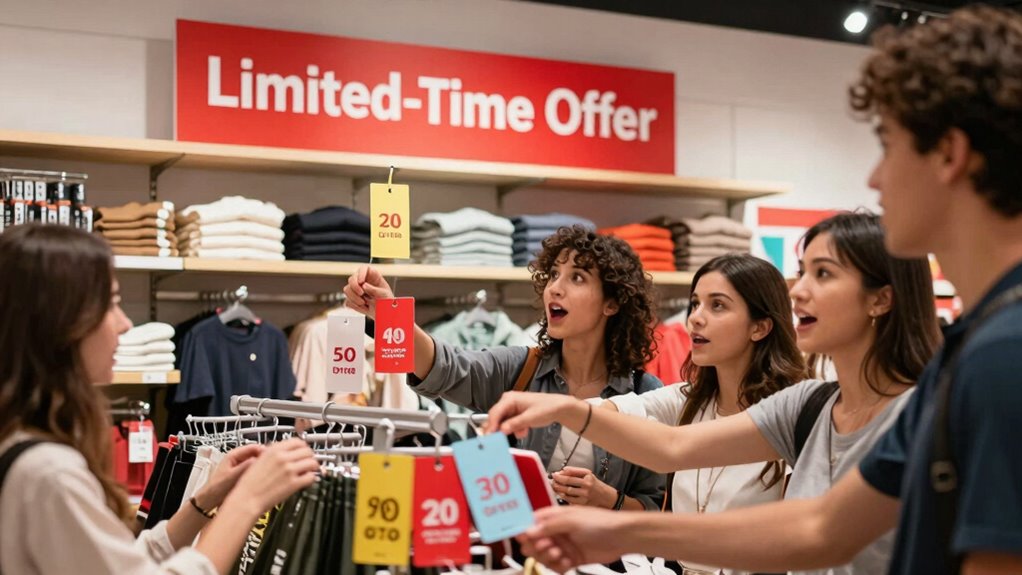

Limited-time offers work so well on you because they create a sense of urgency and scarcity that triggers emotional responses like FOMO, pushing you to act quickly. Phrases like “only today” or “while supplies last” make you feel you might miss out on a rare opportunity, often overriding rational judgment. This tactic shifts your focus from value to immediate action. Keep exploring to understand how these strategies influence your decisions even more deeply.
Open a free Amazon Business account
Business pricing, bulk buying and tax-exempt orders.
As an affiliate, we earn on qualifying purchases.
Key Takeaways
- They create a sense of urgency that prompts immediate purchasing decisions.
- Scarcity and exclusivity elevate the perceived value of the offer.
- Countdown timers and limited stock notifications trigger FOMO and emotional responses.
- They shift focus from rational evaluation to quick action, increasing sales.
- Awareness of these tactics empowers buyers to make more deliberate, rational choices.
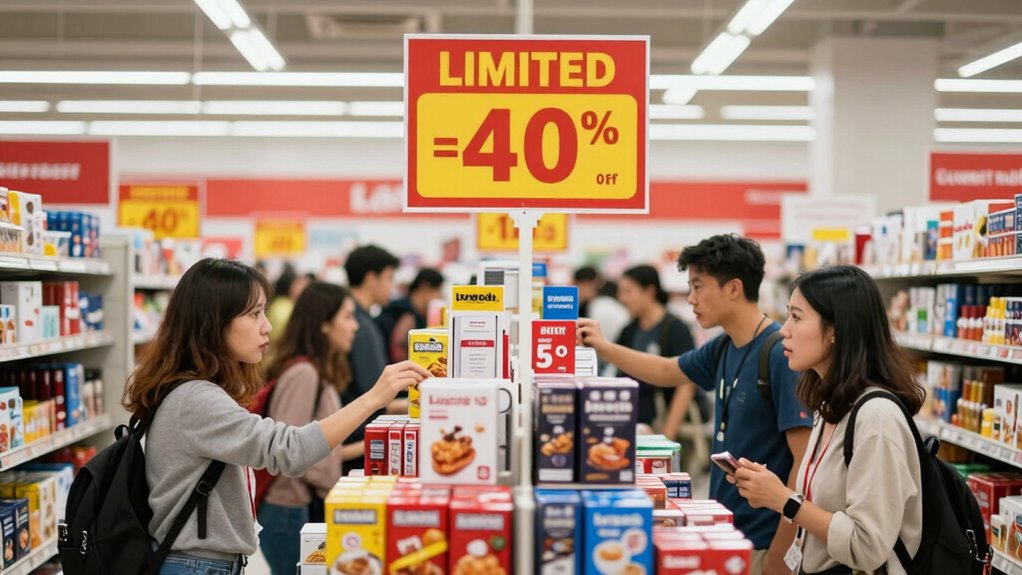
Limited-time offers often create a sense of urgency that can substantially influence your buying decisions. When you see a deal that’s available only for a short period, your mind automatically shifts into a heightened state of alertness. This is where pricing psychology comes into play—your brain perceives the limited window as a signal that missing out could mean losing a valuable opportunity. Retailers leverage this by framing their offers as rare or exclusive, making you feel that acting quickly is the best way to secure a good deal. The scarcity of the deal triggers an emotional response, pushing you toward making a quicker decision than you might otherwise.
Urgency tactics are the tools used to amplify this effect. They include countdown timers, limited stock notifications, or phrases like “Only available today” or “While supplies last.” These tactics tap into your natural fear of missing out (FOMO), compelling you to act before the opportunity slips away. The psychology behind this is straightforward: your brain perceives time as a finite resource, so when it’s emphasized that time is running out, you prioritize immediate action over careful consideration. This sense of scarcity and urgency can override your usual hesitation, making you more likely to purchase on impulse rather than after thorough deliberation.
Furthermore, limited-time offers often feel like exclusive deals meant just for you. When a retailer employs urgency tactics, they create a perception that the deal is tailored or rare, which boosts its perceived value. This perception enhances the effectiveness of pricing psychology because you start to associate the offer with a perceived exclusivity that you shouldn’t pass up. This perception reinforces the idea that the deal is a unique opportunity, heightening its appeal. The combination of emotional triggers and the perception of exclusivity makes you more receptive to the deal, regardless of whether it’s genuinely the best option available.
You might also notice that these tactics influence your willingness to accept higher prices or less favorable terms. When time is running out, your focus shifts from evaluating the true value to acting swiftly. This psychological pressure can cause you to overlook better options or discounts elsewhere. Retailers know this, which is why they often use limited-time offers as a strategic move to accelerate your decision-making process. They understand that by creating a sense of urgency, they can sway your choices and increase sales, sometimes at the expense of your rational judgment. Recognizing the content psychology behind these tactics can help you make more informed decisions and resist impulsive buying. Additionally, understanding how scarcity influences your choices can empower you to pause and evaluate whether a deal truly benefits you before rushing into a purchase.
limited-time deal countdown timer
As an affiliate, we earn on qualifying purchases.
As an affiliate, we earn on qualifying purchases.
Frequently Asked Questions
How Do Limited-Time Offers Influence Long-Term Customer Loyalty?
Limited-time offers can boost your long-term customer loyalty by strengthening customer trust and positively shaping your brand perception. When you provide exclusive deals, customers feel valued and appreciated, encouraging repeat business. This sense of urgency and exclusivity fosters a stronger connection with your brand, making customers more likely to stay loyal over time. As a result, your brand perception improves, and customers view your business as attentive and responsive to their needs.
What Psychological Factors Make Buyers Act Quickly During Limited-Time Deals?
Ever wonder why you act fast during limited-time deals? It’s mainly the psychological impact of impulse buying and the scarcity effect. When you see an offer about to expire, your brain perceives scarcity as a sign you’ll miss out, triggering an urge to buy immediately. This sense of urgency bypasses rational thinking, making you more likely to act quickly and seize the deal before it’s gone.
Are Limited-Time Offers More Effective Online or In-Store?
Limited-time offers tend to be more effective online because they tap into your price sensitivity and impulse buying tendencies. When you shop online, the urgency feels more immediate, encouraging quick decisions. In-store, you might have more time to reconsider. Online deals leverage scarcity and instant access, prompting you to act fast before missing out, making these offers particularly powerful for triggering spontaneous purchases.
How Do Different Demographics Respond to Limited-Time Promotions?
Different demographics respond uniquely to limited-time promotions due to their preferences and cultural differences. Younger audiences often seek excitement and urgency, making these offers highly effective for them. Older groups might prefer value and trust, so clear benefits matter more. Cultural differences influence perceptions of scarcity; some cultures view limited-time deals as a sign of exclusivity, while others see them as pressure. Tailoring offers to demographic preferences boosts engagement.
What Are Common Mistakes Businesses Make With Limited-Time Offers?
Don’t put all your eggs in one basket—many businesses mistake their limited-time offers by poorly planning pricing strategies or ignoring customer perceptions. You might rush the promotion or set unrealistic expectations, leading to disappointment or mistrust. Remember, timing and clarity matter. By understanding your audience and crafting transparent, compelling offers, you build trust and drive sales, instead of risking damage to your brand’s reputation.
As an affiliate, we earn on qualifying purchases.
Conclusion
Imagine walking into a store, the clock ticking down as the flashing sign whispers, “Limited time only.” You feel that rush, the urgency pulling you closer. That’s the magic of limited-time offers—creating a sense of scarcity that makes you act fast, like grabbing the last slice of pizza before someone else does. When time’s running out, your desire heats up, turning hesitation into action. That’s why these offers work so well on you.
As an affiliate, we earn on qualifying purchases.
As an affiliate, we earn on qualifying purchases.
Flea & tick season Picks
flea and tick prevention
As an affiliate, we earn on qualifying purchases.