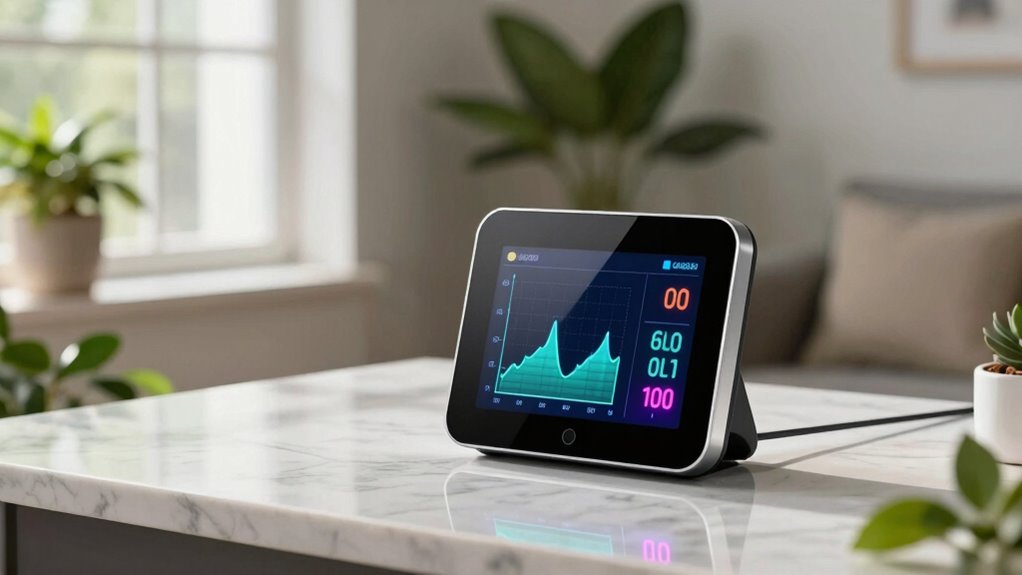

Air quality monitors help you understand your home environment by providing real-time data on pollutants like dust, VOCs, and mold spores. Proper placement guarantees accurate readings, allowing you to identify pollution sources and patterns. With this information, you can take targeted actions such as increasing ventilation or using air purifiers. Continuous monitoring not only reveals fluctuations but also empowers you to control air quality effectively. Keep exploring to discover how these tools can further improve your living space.
Key Takeaways
- Air quality monitors provide real-time data on pollutants like dust, VOCs, and mold, helping residents understand indoor air conditions.
- Proper placement ensures accurate readings, giving a true picture of the home’s air quality during daily activities.
- Monitoring identifies pollution sources and patterns, enabling targeted actions to improve indoor air health.
- Continuous data tracking reveals fluctuations over time, helping to adjust ventilation and cleaning routines effectively.
- Clear insights empower homeowners to make informed decisions and implement strategies for healthier living environments.
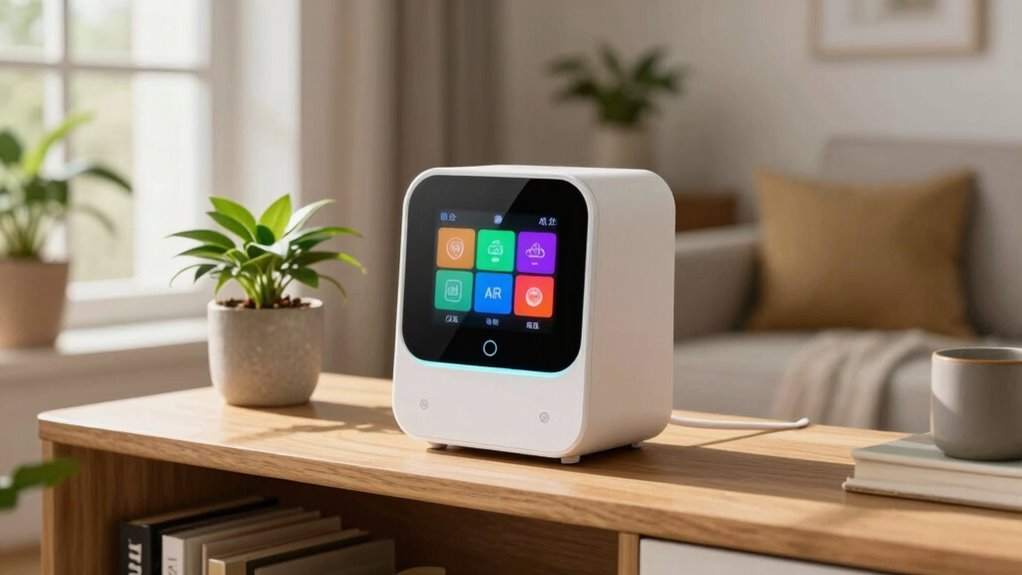
Have you ever wondered how clean the air really is in your home or workplace? Many people underestimate the level of indoor pollution they’re exposed to daily. Dust, pet dander, mold spores, volatile organic compounds (VOCs), and other pollutants can accumulate silently, affecting your health and well-being. That’s where air quality monitors come into play. They give you real-time insights into the air you breathe, helping you understand your environment better. Instead of guessing whether the air is safe, you get concrete data that allows you to make informed decisions.
Indoor pollution like dust, pet dander, and VOCs can silently affect your health—monitor your air for better well-being.
Using an air quality monitor effectively starts with proper monitor placement. If you place the device in the wrong spot, you might get misleading readings. For example, positioning it near a window or a vent could skew results, making it seem like your indoor air quality is better or worse than it actually is. To get accurate readings, you should keep the monitor in a central location, away from direct sources of pollution like cooking areas, fireplaces, or strong cleaning agents. It’s also best to keep it at eye level, roughly 3 to 6 feet above the ground, as this is where you typically breathe. This way, the monitor captures a realistic snapshot of the air you’re exposed to during your daily activities.
Understanding indoor pollution levels through the monitor’s data allows you to take targeted actions. For instance, if the monitor detects high levels of particulate matter or VOCs, you can increase ventilation, use air purifiers, or eliminate specific sources of pollution. Over time, these adjustments can profoundly improve your indoor air quality, reducing your risk of respiratory issues or allergies. The real-time feedback from the monitor also helps you recognize patterns—perhaps noticing that air quality dips during certain hours or activities—so you can better control your environment. Additionally, knowing the sources of indoor pollution can help you implement more effective strategies for healthier indoor air. Incorporating knowledge about indoor pollutants enables you to make smarter choices in your cleaning routines and product selections. Recognizing the importance of monitoring can also motivate ongoing efforts to maintain healthier air quality. Being aware of air quality standards can further guide your efforts in maintaining a safe environment.
Air quality monitors don’t just serve as a diagnostic tool; they empower you to create a healthier living or working space. With accurate placement and ongoing monitoring, you gain a clearer picture of indoor pollution levels and their sources. This knowledge enables you to implement effective strategies, whether it’s improving ventilation, reducing chemical use, or cleaning more frequently. Additionally, understanding your indoor environment can help you identify pollution sources, leading to more targeted improvements. Ultimately, these devices give you control over your environment, making it easier to maintain a safe and comfortable indoor atmosphere. When you understand what’s in the air around you, you’re better equipped to protect your health and well-being every day.
As an affiliate, we earn on qualifying purchases.
Frequently Asked Questions
How Accurate Are Consumer-Grade Air Quality Monitors?
Consumer-grade air quality monitors are generally fairly accurate, but their sensor sensitivity can vary, affecting data reliability. You might notice some fluctuations or occasional inaccuracies, especially compared to professional-grade equipment. However, they still provide valuable insights into your home’s air quality, helping you identify issues like high VOC levels or poor ventilation. Just remember, for critical health concerns, consulting a professional for more precise measurements is always a good idea.
Can Air Quality Monitors Detect All Types of Pollutants?
Air quality monitors can’t detect all types of pollutants, but many include chemical sensors that identify common indoor allergens like volatile organic compounds (VOCs) and other airborne chemicals. These devices mainly focus on detecting gases and particulates, so certain pollutants like bacteria or mold spores might go unnoticed. To get an all-inclusive understanding of your home’s air quality, consider using multiple sensors or specialized testing methods alongside your monitor.
How Often Should I Calibrate My Air Quality Monitor?
You should calibrate your air quality monitor based on the manufacturer’s recommendations, typically every 1 to 3 months. Proper sensor placement, like keeping it away from vents or windows, guarantees accurate readings. Regular calibration maintains sensor accuracy over time. If you notice inconsistent or unusual readings, consider calibrating more frequently. Consistently following calibration frequency guidelines helps your monitor provide reliable data for a healthier home environment.
Do Air Quality Monitors Require Professional Installation?
You don’t need professional setup for most air quality monitors. Many models are designed for easy installation, so you can typically set them up yourself. However, if you prefer a seamless experience, professional installation might be worth the investment, though it could involve some installation costs. Keep in mind, a professional setup guarantees ideal placement and accurate readings, helping you better understand your home’s air quality with minimal hassle.
Can Air Quality Data Improve My Home’s Ventilation System?
Yes, air quality data can improve your home’s ventilation system. By monitoring indoor airflow and pollutant levels, you can identify areas with poor ventilation or excess moisture. This information allows you to optimize your ventilation system, increasing airflow where needed and reducing stale air. Ultimately, this leads to a healthier, more comfortable living environment by ensuring proper ventilation and better indoor air quality.
As an affiliate, we earn on qualifying purchases.
Conclusion
So, next time you’re gasping for air and blaming your dusty couch, maybe it’s time to thank your air quality monitor. It’s like having a nosy neighbor who never sleeps, catching every sneaky pollutant you missed. With this gadget, you’ll finally know what’s really lurking in your home—no more pretending everything’s fine. After all, who needs peace of mind when you can have a tiny device judging your cleaning skills 24/7?
As an affiliate, we earn on qualifying purchases.
air purifier with air quality sensor
As an affiliate, we earn on qualifying purchases.
As an affiliate, we earn on qualifying purchases.