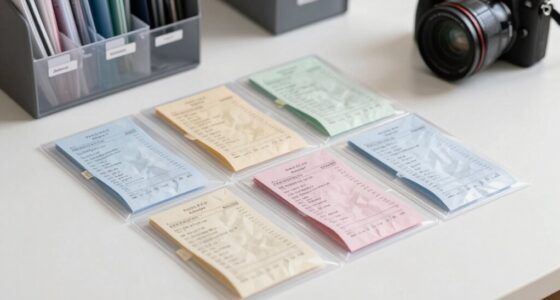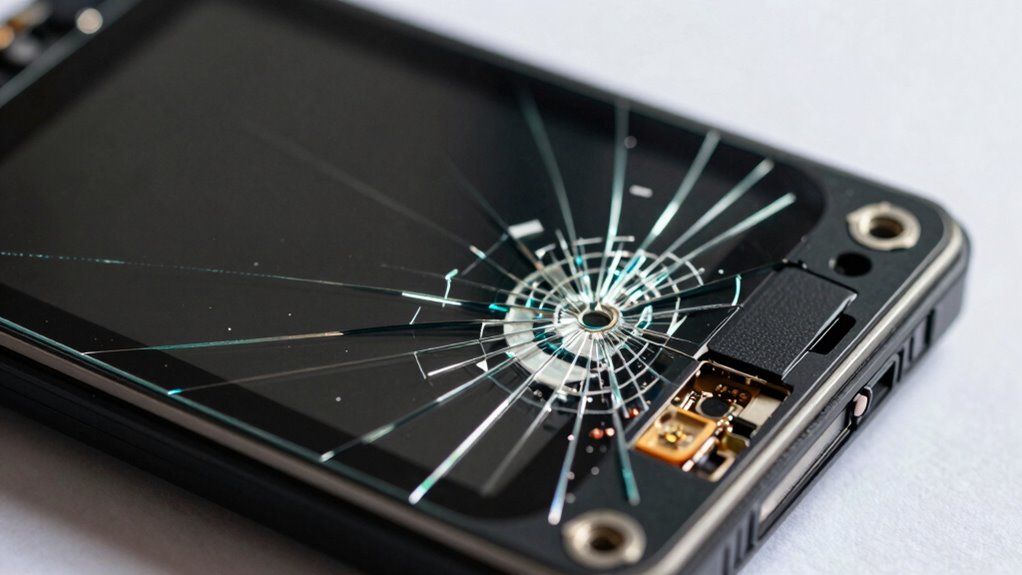

When you report product problems with photos, you give your support team clear proof of the issue, making it easier and faster to diagnose and fix. Photos show the problem’s size, location, and severity, reducing misunderstandings and back-and-forth explanations. Well-taken images can even help when filing warranty claims or escalating. Keep in mind, using proper techniques can make your photos even more effective—details you’ll find out as you explore further.

Get your next haul delivered free with Prime
- Fast, free delivery on millions of items
- Prime Video, Amazon Music and more included
- Member-only deals all year
Key Takeaways
- Photos provide concrete visual proof, making defect identification clearer than verbal descriptions.
- Visual documentation speeds up troubleshooting by showing the exact issue, location, and severity.
- Clear images reduce miscommunication, ensuring support teams understand problems accurately.
- Well-taken photos help in escalation, warranty claims, and verifying product defects effectively.
- High-quality images improve support response times and increase chances of swift, accurate resolutions.

When reporting a product problem, including clear photos can make all the difference in getting your issue resolved quickly. Visual documentation provides a straightforward way for customer service teams to understand exactly what’s wrong. Instead of relying solely on descriptions, which can sometimes be vague or misunderstood, photos give a concrete, visual representation of the defect or issue. This clarity helps avoid back-and-forth emails or calls, speeding up the troubleshooting process and leading to faster solutions.
Including clear photos speeds up problem resolution by providing visual clarity for customer support.
Customer communication is crucial when addressing product problems, and photos serve as an effective tool in this exchange. They eliminate ambiguity, making it easier for the support team to diagnose the problem accurately. For example, if a device isn’t working as expected, a photo showing the damaged part or malfunction can clarify whether it’s a manufacturing defect, shipping damage, or user error. When the support team sees the issue firsthand, they can offer more targeted advice or determine if a replacement or repair is needed. Without visual documentation, they have to rely on your words alone, which might not fully capture the problem’s severity or specifics.
Furthermore, clear photos can help prevent misunderstandings that often occur in written communication. If you describe a crack or a leak, that description might not do justice to the actual size or location of the defect. A photo provides an immediate grasp of the situation, reducing the chance of miscommunication. It also supports your case if you need to escalate the issue or file a warranty claim. Visual evidence makes your report more compelling and easier for customer service to verify, which can lead to quicker resolutions. Additionally, understanding the importance of visual documentation can significantly improve your chances of a successful and prompt resolution. Being aware of product defect reporting best practices, such as taking multiple well-lit photos from different angles, can further improve the clarity of your report.
When taking photos, make sure they are well-lit, focused, and show the problem clearly. Close-up shots often work best, especially if the defect is small or detailed. Including a wider shot that shows the context, like how the product is used or installed, can also be helpful. The goal is to give customer support all the information they need at a glance. Don’t forget to capture multiple angles if possible, as different perspectives can reveal additional details that might be missed in a single image. Paying attention to the quality of images ensures your photos are useful and effective for the troubleshooting process. Additionally, using a steady hand or tripod can help keep images sharp and clear, especially in low-light conditions. Remember, proper image technique can make a big difference in how quickly your issue is understood and resolved.
As an affiliate, we earn on qualifying purchases.
Frequently Asked Questions
How Many Photos Should I Include When Reporting a Problem?
You should include 3 to 5 photos when reporting a problem. Make sure each photo has clear photo clarity to accurately show the issue. Use image annotations if needed to highlight specific details. This helps the support team understand the problem quickly and accurately. Avoid sending too many photos, which can be overwhelming. Focus on capturing different angles and key aspects of the problem for the most effective report.
What if I Don’T Have a Camera or Smartphone?
If you don’t have a camera or smartphone, don’t worry. You can use alternative reporting methods like detailed written descriptions or sketches. To improve your report, focus on clear, concise language, and include important details like the issue’s location and when it occurs. For photo quality tips, consider borrowing a device or using a public camera to capture images. Clear visuals, even if limited, help others understand your problem better.
Can Photos Be Edited or Altered Before Submission?
Imagine you’re in a medieval tavern, but your photos are as authentic as a dragon’s hoard—can they be edited? Yes, you can alter photos before submission, but it risks compromising photo authenticity and image validation. To guarantee your report’s credibility, keep edits minimal and transparent. Authentic, unedited images provide the best proof, helping authorities trust your report and address the product issue swiftly.
How Do I Ensure My Photos Clearly Show the Issue?
To guarantee your photos clearly show the issue, focus on good photo composition by framing the problem center stage and avoiding clutter. Make sure your image clarity is high by using proper lighting and steady hands or a tripod. Capture multiple angles if needed, and zoom in on the specific problem. Clear, well-composed images help others understand the issue quickly, making your report more effective and likely to be resolved faster.
Are Photos Necessary for All Types of Product Problems?
Photos aren’t necessary for every product problem, but they often serve as your visual compass, guiding support teams through the issue. They improve visual clarity and guarantee documentation consistency, making it easier to understand and resolve problems quickly. When you use clear images, you paint a vivid picture of the issue, reducing misunderstandings. So, while not always mandatory, including photos can considerably streamline the troubleshooting process.
digital camera for product photography
As an affiliate, we earn on qualifying purchases.
As an affiliate, we earn on qualifying purchases.
Conclusion
Next time you spot a product issue, remember that a clear photo paints a vivid picture for others—like a snapshot capturing a crack in the sidewalk or a tear in your favorite shirt. Your images turn vague complaints into compelling stories, guiding others to understand and act. So, grab your camera, frame the problem, and let your photos do the talking—turning a simple report into a powerful call for change that’s impossible to ignore.
lighting ring for smartphone photos
As an affiliate, we earn on qualifying purchases.
As an affiliate, we earn on qualifying purchases.
As an affiliate, we earn on qualifying purchases.
Halloween Picks
halloween
As an affiliate, we earn on qualifying purchases.