
The Sony WF-1000XM5 and Bose QuietComfort Ultra Earbuds are premium true wireless earbuds for people who want to cut down noise on commutes, flights, and busy days. The choice comes down to how much you prize Bose’s particularly strong noise cancellation and immersive audio modes against Sony’s longer listening time, compact charging case, and broad feature set.
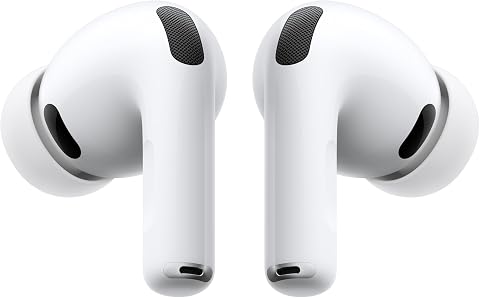
Apple AirPods Pro 3 Wireless Earbuds with Active Noise Cancellation
- ✔ Noise cancellation: Active ANC; stated as up to 2x more than AirPods Pro 2
- ✔ Battery life: Up to 8 hours with ANC; up to 10 hours in Transparency/Hearing Aid modes
- ✔ Ear tips: 5 sizes

Soundcore P30i by Anker Noise Cancelling Wireless Earbuds
- ✔ Connectivity: Wireless, Bluetooth 5.4
- ✔ Noise cancellation: Adaptive ANC stated up to 42 dB; transparency mode
- ✔ Drivers: 10 mm with BassUp technology

JBL Vibe Beam 2 Noise Cancelling Earbuds – Black
- ✔ Noise cancellation: Active Noise Cancelling with Smart Ambient
- ✔ Drivers: 8 mm dynamic drivers
- ✔ Battery life: Up to 10 hours per charge and 40 hours total with case, ANC off
Bose is the better fit if blocking out surrounding sound is your top priority and you are willing to pay for it. Sony makes more sense if you want excellent everyday cancellation with stronger battery endurance and more ways to tune the sound. Neither is a universal winner: fit, phone compatibility, and whether you need wireless charging can change which is the more practical purchase.
At a Glance
| Criteria | Sony WF-1000XM5 | Bose QuietComfort Ultra Earbuds | Winner |
|---|---|---|---|
| Noise cancellation | Excellent adaptive cancellation; effective across everyday noise | Class-leading cancellation for many noisy environments | B |
| Sound and listening modes | Detailed sound with extensive EQ and customization | Immersive Audio spatial modes alongside conventional listening | Depends |
| Battery life | Up to 8 hours with ANC; up to 24 hours with case | Up to 6 hours; less with Immersive Audio enabled | A |
| Comfort and fit | Small earbuds, but foam-style tips may not suit everyone | Comfortable for many, with stability bands and multiple tip sizes | Depends |
| Calls | Good overall, with voice pickup affected by noisy conditions | Useful call processing, though wind and noise can still affect clarity | Tie |
| Controls and features | Multipoint, wireless charging, Speak-to-Chat, and app controls | Customizable modes, touch controls, and app features; no wireless charging | A |
| Value | Usually less expensive while offering a broad feature set | Worth the premium mainly for top-tier cancellation and immersive modes | A |
Apple AirPods Pro 3 Wireless Earbuds with Active Noise Cancellation
The AirPods Pro 3 are the strongest all-around fit here for Apple users who want ANC and useful features beyond music. Apple describes their active noise cancellation as removing up to twice as much unwanted noise as AirPods Pro 2. That is a comparison against the previous Apple generation, not a direct test against the Soundcore or JBL models in this lineup. Five ear tip sizes also give buyers more ways to find a seal, which matters because a comfortable, secure fit can shape both isolation and long listening sessions.Compared with the Soundcore P30i, Apple’s stated battery life is easier to interpret for ANC listening: up to eight hours on a charge with ANC on, rather than Soundcore’s six-hour per-charge ANC figure. Soundcore, however, lists more total playback with its case when ANC is off and offers adjustable ANC through its app. JBL is the more flexible option for switching among paired devices, but its 40-hour claim is also limited to ANC off. The AirPods’ advantage is their combination of noise control, fit choices, and Apple-integrated hearing and workout features.The tradeoff is ecosystem dependence. Live Translation and Workout Buddy require Apple devices, and the provided information does not establish how well the ANC performs in everyday conditions. We would choose these for an iPhone-centered setup, but buyers on Android should compare their priorities carefully: Soundcore and JBL both offer app-based controls without the same Apple-specific framing. This is the best-rounded recommendation here, not a universal best fit for every phone or ear.
Pros:
- Apple states ANC removes up to twice as much unwanted noise as AirPods Pro 2.
- Five ear tip sizes offer more options for finding a secure, comfortable fit.
- Up to eight hours of listening with ANC on.
- Includes hearing health features and heart rate sensing for workouts.
Cons:
- Live Translation and Workout Buddy require Apple devices.
- The supplied ANC claim compares against AirPods Pro 2, not the other earbuds here.
- Real-world ANC performance is not established by the supplied product information.
Best for: Apple device owners who want ANC, several fit options, and hearing or fitness features in one pair.
Not ideal for: Android users seeking full access to the highlighted smart features, or buyers who want a directly comparable ANC-on total battery figure.
Bottom line: For Apple users who value fit flexibility and ANC together, AirPods Pro 3 make the most complete recommendation in this comparison.
“For Apple users who value fit flexibility and ANC together, AirPods Pro 3 make the most complete recommendation in this comparison.”
Soundcore P30i by Anker Noise Cancelling Wireless Earbuds
The Soundcore P30i make the most sense for listeners who want control over the listening setup as well as noise reduction. Adaptive ANC is stated at up to 42 dB, and the app provides adjustable ANC and EQ modes. That flexibility gives the P30i a different appeal from the AirPods Pro 3, whose supplied feature list emphasizes Apple integration, fit choices, and hearing tools. Soundcore also leans into punchy bass with 10 mm drivers and BassUp technology, which may suit bass-focused playlists better than buyers seeking a neutral sound.Its most distinctive extra is the charging case, which doubles as a phone stand for hands-free viewing. This can be handy during travel or at a desk, but it does not improve noise cancellation itself. The battery figures call for a closer look: the P30i list up to 10 hours per charge without ANC and six hours with it, with case totals of 45 and 25 hours respectively. That puts its stated ANC-on case total well below JBL’s 40-hour headline, though JBL only claims that total with ANC off. Apple, by comparison, lists eight hours with ANC on for a single charge.Callers get four microphones with AI call enhancement, and a ten-minute charge is stated to provide two hours of use. The drawbacks are meaningful for ANC-first buyers: battery life drops when ANC is enabled, and there is no headphone jack for wired listening. Choose this model when adjustment, bass, and the clever case matter; choose Apple for Apple-specific features and more ear tip sizes, or JBL if multi-device pairing is the priority.
Pros:
- Adaptive ANC stated at up to 42 dB, with adjustable settings in the app.
- Case doubles as a phone stand for hands-free viewing.
- BassUp tuning and 10 mm drivers target punchy, bass-forward listening.
- Four-microphone AI call enhancement and quick charging.
Cons:
- Battery life falls from up to 10 hours to six hours per charge with ANC enabled.
- The stated case total with ANC on is 25 hours, below the 45-hour ANC-off figure.
- Wireless only; no headphone jack.
Best for: Listeners who want app-adjustable ANC and EQ, bass-forward sound, and a case that can prop up a phone.
Not ideal for: People who need longer ANC-on endurance, wired listening, or a wider set of ear tip sizes than the supplied details confirm.
Bottom line: The P30i are the practical choice for adjustable ANC and useful extras, provided you are comfortable with shorter ANC-on battery life.
“The P30i are the practical choice for adjustable ANC and useful extras, provided you are comfortable with shorter ANC-on battery life.”
JBL Vibe Beam 2 Noise Cancelling Earbuds – Black
The JBL Vibe Beam 2 are a good fit for buyers who want to move between devices and adjust how much of the outside world comes through. Active Noise Cancelling is paired with Smart Ambient technology, while the JBL Headphones app offers EQ, voice prompt settings, and Relax Mode. The supplied details say the earbuds can pair with up to eight Bluetooth devices, which gives them an edge over the P30i and AirPods Pro 3 on stated device flexibility. That is useful for people juggling a phone, tablet, or computer, though the spec does not explain how switching works in practice.JBL uses 8 mm dynamic drivers for its signature Pure Bass sound, a clear contrast with the P30i’s 10 mm drivers and BassUp branding. Driver size alone does not establish which sounds better; listeners should treat both as bass-oriented options and consider app EQ as a way to adjust the presentation. Four microphones are listed for calls, and a ten-minute charge is said to provide three hours of playback, one more than Soundcore’s quick-charge claim.The important limitation is the headline endurance: up to 40 hours total applies with ANC off, with ten hours per charge and three additional case charges. The supplied information does not give a corresponding total with ANC on, so ANC-focused commuters should not assume the maximum figure will apply to their routine. Apple offers a specific ANC-on per-charge figure, and Soundcore supplies both ANC-on and ANC-off totals. JBL also has no wireless charging listed. Choose it for ambient controls, EQ, and device pairing; look elsewhere if transparent ANC-on battery planning is essential.
Pros:
- Active Noise Cancelling with Smart Ambient mode.
- Pairs with up to eight Bluetooth devices, according to the supplied specs.
- App includes EQ, voice prompt settings, and Relax Mode.
- Four microphones and quick charging stated at three hours of playback from ten minutes.
Cons:
- The 40-hour total battery claim applies with ANC off.
- No ANC-on total battery figure is provided.
- Wireless charging is not listed in the supplied details.
Best for: Listeners switching among several Bluetooth devices who want app EQ and adjustable ambient awareness.
Not ideal for: ANC-heavy listeners who need a stated ANC-on total battery figure, or buyers specifically seeking wireless charging.
Bottom line: JBL suits multi-device listeners who value ambient controls, but its ANC-on endurance is less clear than the other picks.
“JBL suits multi-device listeners who value ambient controls, but its ANC-on endurance is less clear than the other picks.”
As an Amazon Associate we earn from qualifying purchases.
Key Differences
The clearest advantage for Bose is noise cancellation. Both earbuds are capable choices for travel and shared spaces, but Bose is the stronger pick when reducing surrounding sound is the main job. That can make a meaningful difference on a loud train or plane. Sony’s cancellation is still very good, so most listeners do not need to pay extra for Bose if they only want to take the edge off office chatter or street noise.
Sony is more balanced for daily ownership. Its stated battery life is longer, the case supports wireless charging, and its app offers extensive sound adjustment. Bose counters with Immersive Audio, which can make music feel more spacious, and fit accessories designed to stabilize the earbuds. Those benefits matter when they match a listener’s habits; they do not outweigh shorter battery life or the missing wireless charging feature for everyone.
For value, Sony is the safer recommendation for most buyers. Bose earns its premium when stronger cancellation noticeably improves frequent travel or when its spatial listening modes are a priority. Since ear shape and preferred sound are personal, buy from a retailer with a workable return policy and check the fit promptly. A technically capable pair that loosens or causes discomfort will be a poor choice regardless of its cancellation score.
Detailed Comparison
Noise cancellation (Bose QuietComfort Ultra Earbuds wins — moderate)
Bose wins by a moderate margin. QuietComfort Ultra Earbuds are the better choice for listeners who regularly face aircraft cabins, rumbling transit, or other persistently loud settings. Sony also reduces a wide range of everyday sounds well, so the gap matters most for frequent travelers and people working in noisy environments. If cancellation is an occasional convenience rather than a daily need, Sony’s performance is likely sufficient.
Sound and listening modes (moderate difference)
This is a preference-based split. Sony gives listeners detailed EQ options and a flexible conventional listening experience, which makes it easier to tune the sound to personal taste. Bose adds Immersive Audio modes for a more spatial presentation, an appealing feature for compatible listening habits but not a guaranteed improvement for every track. Sony suits hands-on sound tuning; Bose suits listeners who want to experiment with spatial effects.
Battery life (Sony WF-1000XM5 wins — moderate)
Sony wins by a moderate margin. Sony rates the earbuds for up to eight hours with noise cancellation on and up to 24 hours including the case. Bose rates its earbuds for up to six hours, with less time when Immersive Audio is active. Actual results vary with volume and settings, but Sony offers more room for long listening sessions and fewer opportunities to hunt for a charger.
Comfort and fit (moderate difference)
There is no reliable universal winner. Sony’s earbuds are compact, but their foam-style tips may feel unfamiliar or may not seal well for some ears. Bose includes fit bands as well as multiple tip sizes, which can help with stability, though its shape will not suit everyone either. Since fit affects comfort, seal, and cancellation, try both if possible and treat the return window as part of the buying decision.
Calls (minor difference)
The difference is minor, so this is a tie for most buyers. Both provide call processing and work for routine conversations, but neither should be treated as a guarantee of studio-like speech in traffic, wind, or crowded spaces. If frequent calls are your main reason for buying, check current independent microphone samples and test them in the settings you actually use. A well-sealed fit and a quiet location may matter as much as the model.
Controls and everyday features (Sony WF-1000XM5 wins — moderate)
Sony has a moderate practical edge. Its feature set includes multipoint connection, wireless charging, Speak-to-Chat, and substantial app customization. Bose offers customizable modes and controls, but its case does not support wireless charging. For someone switching between devices or charging on a wireless pad, Sony’s conveniences can add up over time. If neither feature matters to you, Bose’s simpler set is unlikely to be a drawback.
Value (Sony WF-1000XM5 wins — major)
Sony wins for most buyers, with a moderate-to-major difference depending on the sale price. It combines excellent cancellation with longer rated battery life and a rich feature set, and it is often the less expensive option. Bose is worth paying more for when its stronger cancellation solves a frequent, specific problem or Immersive Audio is a feature you will use. If neither applies, the extra spend buys less practical improvement.
Sony WF-1000XM5: Pros and Cons
Pros:
- Longer rated battery life with ANC
- Wireless charging case
- Multipoint connectivity and extensive app customization
- Usually stronger value for a broad range of everyday use
Cons:
- Cancellation is not as strong as Bose’s in especially noisy settings
- Foam-style tips may not fit or feel comfortable for every listener
- Spatial listening options may be less appealing to buyers drawn to Bose Immersive Audio
Bose QuietComfort Ultra Earbuds: Pros and Cons
Pros:
- Stronger noise cancellation for challenging environments
- Immersive Audio modes for listeners who like spatial sound
- Fit bands can help keep the earbuds stable
Cons:
- Shorter rated battery life, especially with Immersive Audio enabled
- No wireless charging for the case
- Higher price is harder to justify if maximum cancellation is not a priority
Who Should Choose What
Choose Sony WF-1000XM5 if:
- You want excellent cancellation but also care about battery life and everyday convenience.
- You switch between devices and will use multipoint or wireless charging.
- You want to tune your sound with EQ and prefer a lower typical purchase price.
Choose Bose QuietComfort Ultra Earbuds if:
- You travel often or spend long hours in environments where stronger noise cancellation has real value.
- You have tried Bose’s fit and prefer its stability bands and tip combination.
- You enjoy Immersive Audio and are comfortable paying a premium for it.
Skip both if: Skip both if neither fits comfortably, if your budget does not stretch to premium earbuds, or if reliable call quality in loud places is more important than noise cancellation.
Value for Money
Sony is the better value for most listeners because it pairs strong noise cancellation with longer stated battery life, wireless charging, and broad app controls, usually at a lower price than Bose. Paying more for Bose makes sense when you frequently ride planes or noisy transit and the added cancellation improves those hours, or when you specifically want Immersive Audio. If your routine is mostly quiet offices, home listening, and occasional errands, Bose’s premium is unlikely to return enough everyday benefit.
Compare current sale prices before deciding: discounts can narrow the gap, and either model may become the better buy at a different price. Still, the deciding question should be whether Bose’s extra cancellation solves a recurring problem for you. If not, Sony’s combination of endurance and convenience is the more sensible spend.
Final Verdict
Choose the Sony WF-1000XM5 if you want the strongest all-round balance: excellent cancellation, longer battery life, wireless charging, multipoint, and better typical value. For most people choosing premium noise-canceling earbuds, Sony is the recommendation.
Choose the Bose QuietComfort Ultra Earbuds if noise reduction is the deciding factor, especially for frequent flights or consistently loud commutes, or if Immersive Audio is a feature you will use often. The biggest deciding factor is whether Bose’s stronger cancellation is worth the shorter battery life and higher price in your daily routine. If fit or call quality is your primary concern, try both before choosing or consider a different category of product.
Frequently Asked Questions
Which earbuds cancel noise better?
Bose QuietComfort Ultra Earbuds have the edge, particularly in challenging noisy settings. Sony WF-1000XM5 still offer very capable cancellation for everyday travel, work, and errands.
Which lasts longer on a charge?
Sony rates the WF-1000XM5 for up to eight hours with ANC, compared with up to six hours for Bose QuietComfort Ultra Earbuds. Bose battery life falls further when Immersive Audio is enabled; real results vary with settings and volume.
Is Bose worth paying more for?
It can be for frequent travelers or anyone who regularly faces loud surroundings and values stronger cancellation. For general everyday listening, Sony’s longer rated battery life and broader convenience features make it the better value for most buyers.
Which pair should I buy for commuting?
Choose Bose for especially noisy routes where maximum cancellation matters most. Choose Sony for a mix of commuting, work, and daily listening where battery life, wireless charging, and device switching matter too.