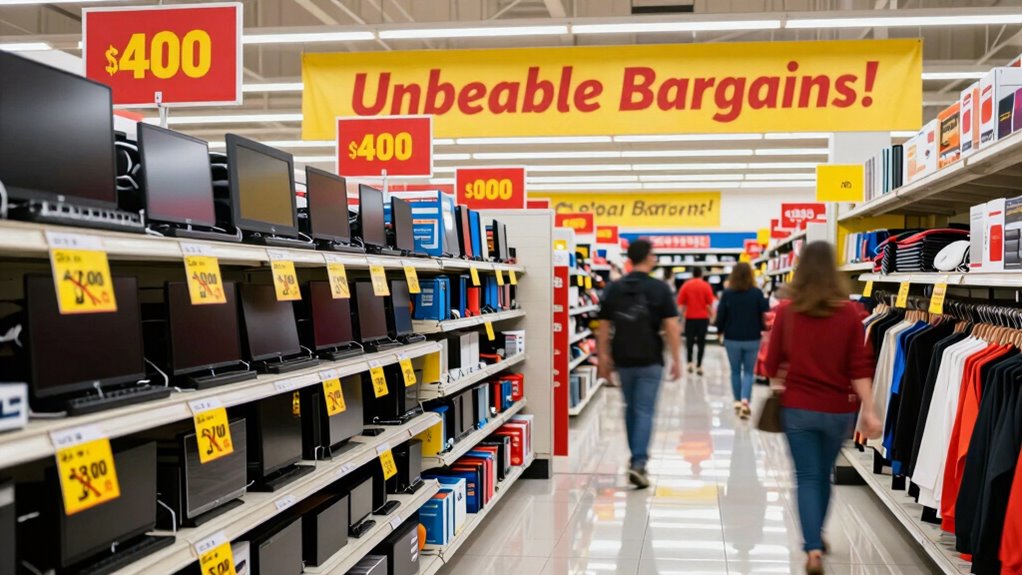

Outlet discounts often seem impressive, but they’re often part of strategic pricing and marketing tactics rather than real savings. Brands sell overstock or last season’s items, and their discounts can be inflated to create a sense of value. They may keep the same quality but use pricing tricks to make deals look better than they actually are. If you want to uncover the truth behind these claims and shop smarter, keep exploring what the experts reveal.

Get your next haul delivered free with Prime
- Fast, free delivery on millions of items
- Prime Video, Amazon Music and more included
- Member-only deals all year
Key Takeaways
- Outlet discounts often involve overstock or last season’s products, not true luxury bargains.
- Brands use outlet pricing strategically to manage inventory without diluting brand prestige.
- Marketing tactics like limited-time offers create urgency but may not reflect genuine savings.
- Discounts can be inflated or manipulated to influence perceived value, not necessarily indicating real deal.
- Being informed helps consumers differentiate between marketing hype and authentic value.
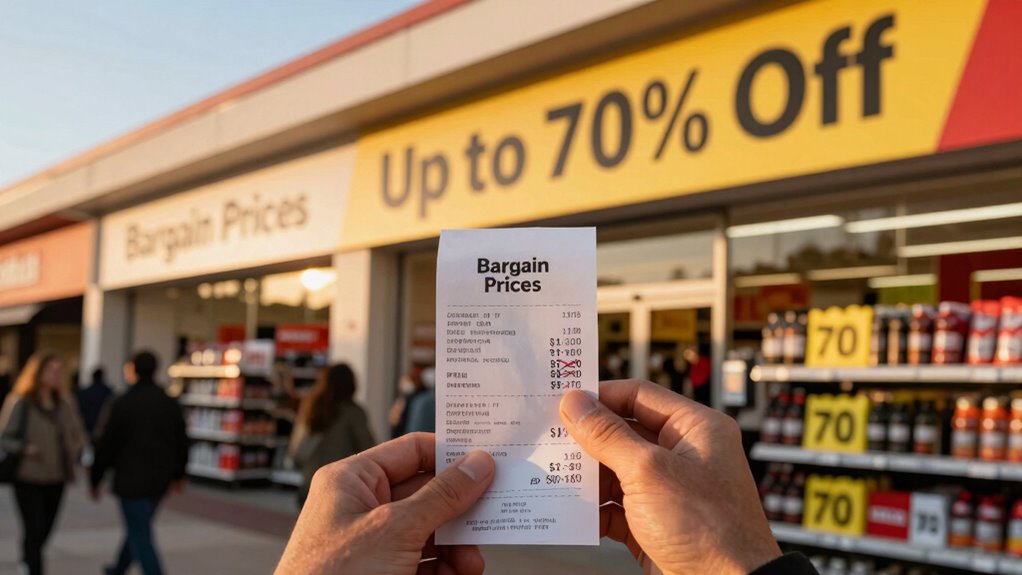
Outlet pricing often promises deep discounts and unbeatable bargains, but it’s important to approach these claims with a critical eye. Many consumers walk into outlet stores expecting to find luxury branding at a fraction of the original price. However, the reality is often more complex. Retailers use various pricing strategies to attract shoppers, and understanding these tactics can help you make smarter purchasing decisions.
Luxury brands, in particular, are known for their carefully crafted branding and pricing strategies. When these brands produce products for outlets, they don’t simply mark down items to clear inventory. Instead, they often create separate product lines or slightly altered versions that maintain the brand’s prestige but allow for a different pricing structure. This means that what you see discounted may not always be the same as the full-priced luxury items sold in flagship stores. Many brands use outlet pricing as a way to manage excess inventory without diluting their core luxury image. So, the “discounts” aren’t always as deep as they seem; they’re part of a carefully designed strategy to keep the brand’s exclusivity intact while still offering deals.
You should also be aware that outlet pricing strategies are often aimed at creating a sense of urgency and exclusivity. Limited-time deals or “final sale” signs can make you feel like you’re getting a rare opportunity. But in reality, these tactics are designed to move inventory quickly, sometimes at the expense of true value. Many items in outlets are overstock or last season’s products, which retailers mark down to clear space for newer collections. This doesn’t necessarily mean you’re getting a steal; it might simply reflect that the product is no longer in high demand or has been replaced by newer designs. Additionally, some brands adjust the perceived value of their products through pricing strategies, which can influence consumer perception regardless of actual quality. Recognizing that pricing tactics are often used to manipulate perceived value can help you shop more mindfully. Understanding the markups applied to products can also reveal whether the discounts are genuinely substantial or primarily marketing-driven. Furthermore, awareness of brand positioning can help you discern whether a product’s perceived luxury is genuine or just a marketing facade.
It’s also worth noting that pricing strategies vary between brands and retailers. Some outlets price items just below retail to attract shoppers, but the original markup may have been artificially inflated. Others might offer significant discounts to make products seem more appealing, but the actual quality or craftsmanship may be consistent across the full-price and outlet versions. By understanding these strategies, you can better evaluate whether an outlet deal truly offers value or if you’re paying for the brand name and marketing hype rather than quality.
In the end, approaching outlet pricing with knowledge of branding and pricing strategies allows you to shop more confidently. Recognize that discounts are often part of a carefully curated marketing approach, and not every bargain is as good as it appears. Staying informed helps you avoid falling for marketing tricks and ensures you make purchases that are both satisfying and financially sound.
As an affiliate, we earn on qualifying purchases.
Frequently Asked Questions
How Can I Verify if a Deal Is Truly a Bargain?
To verify if a deal is truly a bargain, you should do price comparisons across different stores and online. Look for discounts that are genuinely significant, not just small markdowns. Use discount strategies like checking for seasonal sales or coupon codes. Don’t forget to take into account the original price to see if the deal offers real savings, and read reviews to guarantee the quality matches the price.
Do Outlet Stores Always Sell Past Season Items?
Outlet stores don’t always sell past season items; sometimes, they stock current season products at discounted prices. When shopping for luxury brands, be cautious, as some outlets may carry counterfeit products or items made specifically for outlet sales. Always verify the authenticity of the products and check if the items are truly from the current season or if they’re older stock. This helps guarantee you’re getting a genuine deal.
Are Outlet Prices Consistent Across Different Locations?
Outlet prices aren’t always consistent across different locations. You might find some stores offering better deals than others, so it’s smart to compare prices before buying. Brand reputation plays a role here—popular brands tend to have more stable pricing, but discounts can vary. To get the best deal, do a price comparison online and visit multiple outlets if possible, ensuring you’re getting the most value for your money.
Can Outlet Pricing Be Affected by Regional Economic Differences?
Yes, outlet pricing can be affected by regional economic disparities. When you shop in different regions, you’ll notice prices often vary due to factors like local economic conditions, cost of living, and regional demand. Retailers adjust their regional pricing strategies to match economic disparities, meaning you might find better deals in some areas than others. Be mindful of these differences to maximize your savings when shopping at outlets across various locations.
What Should I Look for to Spot False Bargain Claims?
To spot false bargain claims, you should do a thorough price comparison across multiple stores or online. Look for inconsistencies in the listed prices and discounts. Check the brand authenticity by verifying labels, logos, and packaging. Be cautious of exaggerated discounts that seem too good to be true. If the deal appears suspicious or the price is markedly lower than usual, it’s a good sign to dig deeper before making a purchase.
overstock clearance sale electronics
As an affiliate, we earn on qualifying purchases.
As an affiliate, we earn on qualifying purchases.
Conclusion
Now that you know the truth about outlet pricing and bargain claims, you can shop smarter. Remember, just because something’s labeled as a deal doesn’t mean it’s a steal. Keep your eyes open, compare prices, and don’t let false discounts pull the wool over your eyes. When it comes to bargains, it’s always better to be safe than sorry—don’t let the hype lead you astray. Stay savvy and shop wisely!
As an affiliate, we earn on qualifying purchases.
As an affiliate, we earn on qualifying purchases.
Halloween Picks
halloween
As an affiliate, we earn on qualifying purchases.